WeatherNext and the Future of AI-Powered Weather Forecasting
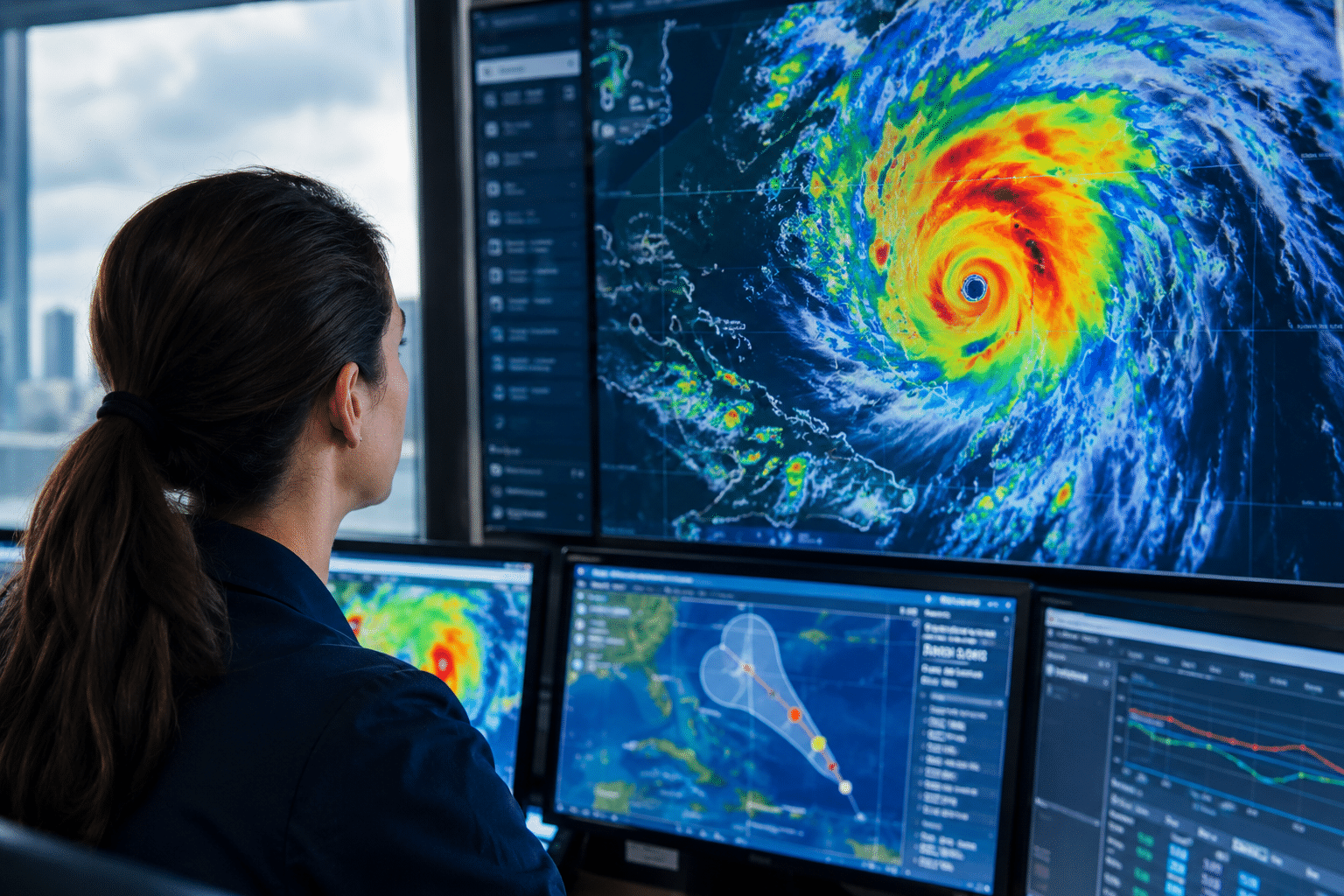
Historically, weather forecasting has depended on data, experience, and increasingly sophisticated computer models. Today, another tool is changing the way meteorologists look at the atmosphere: artificial intelligence.
Google DeepMind's WeatherNext family of AI weather models represents a significant development in forecasting technology. Unlike traditional forecasting systems that rely heavily on complex physics-based calculations performed on supercomputers, AI models can learn patterns from enormous amounts of historical weather data and use those patterns to generate forecasts quickly.
For meteorologists, however, the real value of technology such as WeatherNext isn't about replacing human expertise. It is about giving professionals another powerful source of information when analyzing weather conditions, assessing risk, and making decisions.
What Is WeatherNext?
WeatherNext is a family of artificial intelligence weather forecasting models developed by Google DeepMind and Google Research. The technology is designed to generate predictions for important weather variables, including precipitation, wind, pressure, and other atmospheric conditions. The latest version, WeatherNext 3, is Google’s most advanced global weather AI model yet..
One of the biggest differences between AI forecasting and traditional approaches is speed. WeatherNext can generate forecasts much more quickly than many conventional numerical weather prediction systems. That makes it possible to examine more potential scenarios in less time.
That capability is particularly important when dealing with severe weather, where conditions can change quickly and the difference between having information several hours earlier or later can be significant.
AI Forecasting Doesn't Mean the End of Traditional Meteorology
It is important to understand what AI forecasting does—and does not—mean.
Traditional numerical weather prediction remains a cornerstone of modern meteorology. These models use the laws of physics to simulate how the atmosphere evolves. Meteorologists then evaluate those model outputs alongside observations from satellites, radar, weather stations, aircraft, ocean buoys, and other sources.
AI provides another approach.
Rather than calculating every atmospheric process from the ground up, machine-learning models can identify relationships and patterns in historical weather data. WeatherNext, for example, has been trained using enormous datasets containing atmospheric information and historical tropical cyclone observations.
The result is not necessarily a choice between "AI" and "meteorologists." Instead, the future of forecasting is likely to involve both.
Human meteorologists provide something an AI model cannot: professional judgment based on experience, observations, local knowledge, model evaluation, and an understanding of the limitations of forecasting technology.
Why WeatherNext Matters for Severe Weather
One of the most promising applications of AI forecasting is severe and extreme weather.
Hurricanes are particularly challenging because forecasters need to understand where a storm might form, where it is likely to travel, and how strong it could become. Those two questions involve different atmospheric processes.
Recent WeatherNext research has focused specifically on tropical cyclones. Google DeepMind reported that its WeatherNext Cyclones model demonstrated improvements in predicting storm track, intensity, and wind structure, with testing showing an average lead-time advantage of more than 24 hours compared with previous forecasting benchmarks.
Hurricane Melissa, a catastrophic Cat 5 storm that struck the Caribbean in October, 2025, offered another real-world example of how AI forecasting can contribute to hurricane prediction. WeatherNext was used alongside other forecasting tools as the storm developed, helping forecasters identify the possibility of rapid intensification and a major hurricane threat to Jamaica days before landfall.
Situations like this show where AI could become a useful part of future forecasting. The sooner meteorologists can recognize that a storm may become dangerous, the more time there is to prepare. That extra time can make a difference for emergency managers, businesses, infrastructure operators, and communities in the path of a storm.
Ensembles Could Be Especially Valuable
Weather is inherently uncertain. Even the best forecast cannot eliminate uncertainty because the atmosphere is an enormously complicated system.
That is why meteorologists often rely on ensemble forecasting. Instead of looking at one predicted outcome, an ensemble generates multiple possible scenarios. The differences between those scenarios can help forecasters understand the range of potential outcomes.
WeatherNext can generate large ensembles of possible forecasts.
For decision-makers, that can be more useful than simply asking, "Where will the storm go?"
The better questions may be: What are the most likely outcomes? How wide is the range of possibilities? What low-probability scenarios could have major consequences?
That type of information can be particularly important when analyzing hurricanes, flooding, damaging winds, winter weather, and other events where the consequences of an unexpected outcome can be substantial.
What AI Forecasting Means for Meteorological Consulting
For a meteorological consulting firm such as Atlantic States Weather advances in AI forecasting are another development to incorporate into the larger process of weather analysis.
Atlantic States Weather has handled more than 850 cases since its founding in 2004, providing forensic meteorology, investigation and analysis, meteorological training, litigation support, and expert testimony.
That work often requires looking beyond a standard forecast. A forensic meteorological investigation may involve determining what the weather was at a particular location and time, reconstructing a past storm, analyzing hurricane winds or storm surge, or examining whether weather conditions could have contributed to an event.
AI forecasting can become another source of information within that larger analysis. It does not eliminate the need to examine historical observations, official records, radar, satellite data, weather stations, and established meteorological models.
In fact, as forecasting technology becomes more sophisticated, professional interpretation becomes even more important.
The Human Expert Still Matters
WeatherNext demonstrates how quickly artificial intelligence is advancing the science of weather prediction. But technology is most useful when its capabilities and limitations are understood.
AI models can process enormous quantities of information and produce forecasts quickly. Experienced meteorologists can evaluate those forecasts in context, compare different sources of information, identify inconsistencies, and explain what the weather means for a specific location or situation.
For legal cases, investigations, emergency planning, and other applications where weather information must stand up to scrutiny, that distinction matters.
Atlantic States Weather combines meteorological expertise with a range of forecasting, observational, and analytical resources to investigate weather events and help clients understand what happened, when it happened, and how weather conditions may have contributed to an event.